
Here is a comprehensive course description for the home study program, structured to highlight the value and practical skills it offers to massage therapists.
Gua Sha and IASTM for Massage Therapy Pain Relief
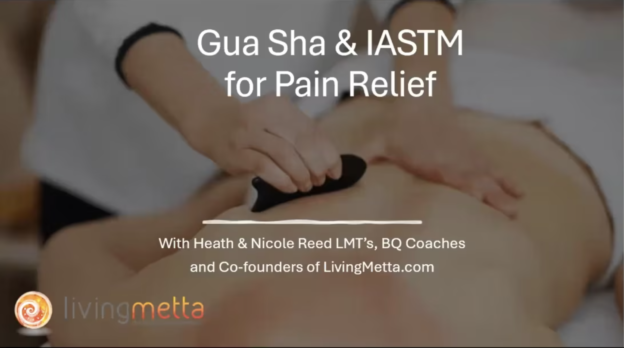
Course Overview Welcome to this immersive home study program presented by Heath and Nicole Reed. This course explores the integration of Gua Sha and Instrument-Assisted Soft Tissue Mobilization (IASTM) to effectively treat soft tissue disorders and injuries. By utilizing specialized scraping tools, therapists will learn how to manipulate the skin, muscles, tendons, and myofascial tissue to break down disorganized fascia and trigger points. Rooted in the rich history of Traditional Chinese Medicine and modernized through Western clinical practices, this program offers a highly effective pathway to improve client mobility and accelerate tissue healing.
What the Course Will Provide
- Fundamental Principles: A foundational understanding of how Gua Sha and IASTM mechanisms improve blood flow, increase range of motion, and speed up the healing process.
- Career Longevity: Ergonomic strategies that allow therapists to provide deeper pressure with less physical effort, ultimately saving your hands.
- Safety and Efficacy: Comprehensive guidelines on contraindications, such as avoiding use on unhealed fractures, blood thinners, varicose veins, and acute inflammatory conditions.
- Clinical Considerations: Expert guidance on selecting the appropriate tool size, applying the correct massage medium, and understanding how tool angles and speeds impact the intensity of the treatment.
- After-Care Best Practices: Protocols to support client recovery, including hydration recommendations and at-home stretching routines to maintain optimal function.
Skill Sets Participants Will Learn
- Core Scraping Techniques: Mastery of distinct tool strokes including Sweeping, Fanning, Wiggling, Two-Hand Gliding, Brushing, Strumming, Peeling, and the rhythmic 1-2-3-sweep.
- Dynamic Integration: The ability to combine scraping with Pin and Stretch options, Active Release (Call for Motion), and client-initiated movement to reinforce neurological reeducation.
- Neck to Shoulder Protocols: Prone applications to address forward head posture, shoulder impingement, adhesive capsulitis, and chronic tension.
- Low Back and Hip Protocols: Prone techniques for treating SI joint pain, pseudo-sciatica, and hip bursitis by targeting the erectors, QL, and gluteal attachments.
- Lower Extremity Protocols: Prone strategies for the hips, knees, ankles, and feet, including highly responsive treatments for plantar fasciitis and chronic ankle instability.
- Side-Lying Approaches: Specialized positioning to elongate target areas and release adhesions across the neck, shoulder, low back, and hips in a side-lying posture.
Course Content
Gua Sha and IASTM Pain Relief Background, History, Safety
Course Includes
- 16 Lessons
- 1 Quiz
- Course Certificate